
The Financial Crisis – Which Inning Are We In?

Professor Edwin T. Burton of the University of Virginia Economics Department spoke on the current economic crisis at a Senior Statesmen of Virginia forum on January 14, 2008. Professor Burton is a well known economic expert who is a frequent guest on WINA. He is the former head of the Virginia Retirement System and is the author of the Burton Finance Blog.

Burton received his B.A. in Economics from Rice University in 1964 and his Ph.D. in Economics from Northwestern University in 1971. He is currently professor of economics at the University of Virginia, a post he has held since 1998. He is also currently a trustee of Virginia Retirement System. His past positions include head of Investment Banking and Municipal Finance at Interstate Johnson Lane from 1994 to 1995, president of Rothschild Financial Services, Inc. from 1987 to 1994, senior vice President of Smith Barney from 1975 to 1984 and assistant and associate professor of economics at Cornell University from 1969 to 1979.

The topic of today’s presentation is “The Financial Crisis – Which Inning Are We In?”. Bill Davis, SSV board member and secretary, moderated today’s program.
Lefler Book tapped to win Prize

Melvyn P. Leffler, Professor of History at the University of Virginia, will receive the American Historical Association’s 2008 George Louis Beer Prize for his book “For the Soul of Mankind: The United States, the Soviet Union, and the Cold War.”

Leffler, named the Randolph Jennings Fellow at the United States Institution for Peace in 2004 and Henry A. Kissinger Fellow in Foreign Policy and International Relations at the Library of Congress in 2004 said he was surprised and deeply gratified by the award, which he will receive in January at the association’s annual meeting in New York City.

Leffler said he has a passion for the history of foreign relations because international diplomacy involves “some of the most important things — war and peace, life and death…”and he went on to say, “This is the best prize the American Historical Association gives to a writer of history of international relations. It is exhilarating to be able to step down from the deanship and revive one’s scholarly career.”

For more information about the show or to see the full text, visit the Oscar Show’s blog

Childhood Obesity: Discussion with Amy Boitnott

In today’s show, based on a recent article by Jane Ford, Senior News officer for the Office of Public Affairs, we introduce and speak with UVa Graduate, and the Commonwealth’s first ever Doctor of Nursing Practice Degree recipient, Amy Drake Boitnott.

On November 14, 2008, the UVa Nursing School granted the Commonwealth’s first ever Doctor of Nursing Practice Degree to Amy Drake Boitnott. John Kirchgessner, assistant professor of nursing and chairman of Boitnott’s review committee said, the DNP differs from a Ph.D. mainly in the focus of the research. A Ph.D.’s primary interest is in pure research. A DNP is a clinical scholar who uses evidence-based research to develop interventions that may improve clinical practice.

Boitnott, an instructor at the School of Nursing since 2004, and a practicing nurse since 1991, recently sat down to discuss her main clinical focus, childhood obesity…

For more information about the show or to see the full text, visit the Oscar Show’s blog


Napolitano Tapped by Obama for Homeland Security Secretary

In today’s show, adapted from an article written by Mary Wood, Director of Communications for the School of Law at the University of Virginia, we discuss UVa Graduate, Janet Napolitano, who was named as the next secretary of the U.S. Department of Homeland Security, a Cabinet-level post, by President-elect Barack Obama.

Arizona Gov. Janet Napolitano, a 1983 graduate of the University of Virginia School of Law, has been nominated as the next secretary of the U.S. Department of Homeland Security.

Dean Paul G. Mahoney said, “Governor Napolitano has dedicated her career to public service, fulfilling an ideal that the University of Virginia Law School holds dear. The nation is fortunate that President-elect Obama has chosen to bring her wide-ranging talents to a vitally important position.”

For more information about the show or to see the full text, visit the Oscar Show’s blog


UVa and the Obama Transition Team

In today’s show, adapted from an article written by Mary Wood, Director of Communications for the School of Law at the University of Virginia, we look at The University of Virginia’s connections to the transition team for President-Elect Barack Obama.

Over the past weeks, candidates for President -elect Obama’s cabinet and transition team have been vetted so that the president-elect can make them offers to be part of the new team that will lead our nation over the next 4 years, following the inauguration scheduled for January 20, 2009.

Since the Commonwealth of Virginia went “blue” for the first time since 1964, there names connected to the Commonwealth that have been considered for posts in the new administration.

For more information about the show or to see the full text, visit the Oscar Show’s blog


NRO’s Jonah Goldberg addresses Jefferson Society

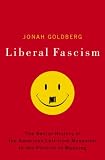
Jonah Goldberg spoke to the Jefferson Literary and Debating Society on Friday, November 21, 2008, on the subject of his latest book, Liberal Fascism: The Secret History of the American Left, From Mussolini to the Politics of Meaning. Mr. Goldberg is editor-at-large of National Review Online, a contributing editor to National Review, and a nationally syndicated columnist.

After his talk, Mr. Goldberg took questions from the audience:

01:01:00 Are political humor shows like the Daily Show or the Colbert Report having a negative effect on today’s youth?

01:03:00 Could you comment on your recent debate with columnist Kathleen Parker on the direction of the GOP?

01:08:00 The Nazis may have begun with a socialist ideology, but had they not moved away from socialism by the late 1930s?

01:13:00 President Lincoln suspended habeas corpus; President John Adams signed the Alien and Sedition Acts: would you classify these two presidents as fascist?

01:17:00 Why in modern political culture is there an impulse to associate with fringe movements like fascism?

01:21:00 What is it about Christianity that rattles totalitarian regimes?

01:26:00 What are some differences in the ways the right and the left use the rhetoric of “the moral equivalent of war”?

Economist Bryan Caplan addresses Jefferson Society

Professor Bryan Caplan addressed the Jefferson Literary and Debating Society on Friday, November 7, 2008, on the subject of his new book, The Myth of the Rational Voter: Why Democracies Choose Bad Policies. Caplan, an associate professor of economics at George Mason University and a Cato Institute Adjunct Scholar, supported his often counter-intuitive theories with findings from his research.


After his presentation, Professor Caplan took questions from the audience, including:

00:44:00 Who tends to score higher on the “political IQ test”: Democrats or Republicans?

00:45:00 What can be done to correct for systematic bias in the voting population?

00:47:00 Should we limit suffrage to knowledgable voters only?

00:50:00 Although average persons may not know the answers to the technical questions on the political IQ test, they do experience economics in every day life. Does that necessarily make their opinions less valuable?

00:52:00 Is the economic feasibility of a policy the only measure of its value?

Habeas Corpus and Ensuring Constitutional Protections

In today’s show, adapted from an article written by freelance writer Karen Doss Bowman, we discuss the work of UVa Professor Paul Halliday, and his research of Habeas Corpus, the only specific right enshrined in the US Constitution.

Habeas corpus, the judicial means by which prisoners may demand that their jailer show a valid reason for their detention, is considered a bedrock of personal liberty in U.S. law–and is the only specific right enshrined in the U.S. Constitution.

For more information about the show or to see the full text, visit the Oscar Show’s blog


Gitmo and “The Response”

In our previous show we reflected on several of the movies showcased at this year’s Virginia Film Festival. In today’s show, we will examine “The Response,” a short film about the Guantanamo Bay War Tribunals and the plight of Guantanamo detainees by Sig Libowitz, screened at this year’s Virginia Film Festival.

During the course of the seven years since 9-11, the United States and its elected representatives have made calculated moves to deal with the declared “War on Terror.” Because of the nature of this global war, which is based more in backrooms around the world than on battlefields, it has become increasingly difficult to have concrete ideas about whom and where we are, or should be fighting.

Because of the clandestine nature of the war, the measures to combat it have also taken a more covert form, including… Abu Ghraib… and more recently, Guantanamo Bay. These Prisoner Detentions Camps were set up in an effort to isolate suspected enemy combatants from battle regions and interrogate them so that the war in the Gulf, and on Terror could be mitigated.

For more information about the show or to see the full text, visit the Oscar Show’s blog


W. Heywood Fralin speaks to the Jefferson Society

Picture of Heywood Fralin, RectorW. Heywood Fralin, Rector of the Board of Visitors of the University of Virginia, gave a “state of the University” address to members of the Jefferson Literary and Debating Society on October 31, 2008.

Mr. Fralin revisited his undergraduate experience of 50 years ago before outlining the Board’s long-range plan for the University. He then took questions from the audience, who sought his opinions on matters ranging from the role of social networking technology to the honor system. Mr. Fralin also fielded questions about the extent to which the University should bind itself to Mr. Jefferson’s original vision, how state government affects long-term planning at the University, and the ideal balance between an emphasis on research and on improving the undergraduate experience.

00:20:00 Who are the University of Virginia’s closest competitors?

0022:00 Please describe a First Year dorm experience from 50 years ago.

00:25:00 Have you observed that students today are not making deep connections with each other, and what role does the University play in this process?

00:28:00 Will the University of Virginia become less of a public institution as it attains great autonomy from the state?

00:30:00 A question about funding for graduate students.

00:32:30 To what extent should we bind ourselves to Mr. Jefferson’s vision for the University? Can we do so and remain competitive today?

00:35:00 Does undergraduate teaching suffer when there is a “publish or perish” emphasis on research?

00:36:30 Given the good-will alumni have toward the University, why is their giving rate relatively low?

00:38:00 How do officials in state government influence long-range planning at the University?

00:41:00 Are there ways to involve graduate students in undergraduate training?

00:43:00 How do you see the apparent disconnect between the Darden School of Business and the rest of the University?

00:45:00 What are your thoughts and opinions on the single-sanction honor system?

2008 Virginia Film Festival

In today’s show, adapted from an article written by John Kelly, we will preview this year’s Virginia Film Festival, hosted by the University of Virginia.

This year’s Virginia Film Festival, hosted by the University of Virginia, will kick off tomorrow, Oct. 30, and will feature some 80 films and 100 guests exploring the fearful and alluring images of immigrants, outsiders and extraterrestrials alike.

One of the highlights will be a special 70th-anniversary rebroadcast of Orson Welles’ classic radio play, “The War of the Worlds, ” tomorrow at 7 p.m. in the McCormick Observatory. And at 10 p.m., the Culbreth Theatre will be screening George Pal’s film classic, “War of the Worlds.” Pal biographer and Charlottesville resident Justin Humphreys will introduce the film.

For more information about the show or to see the full text, visit the Oscar Show’s blog